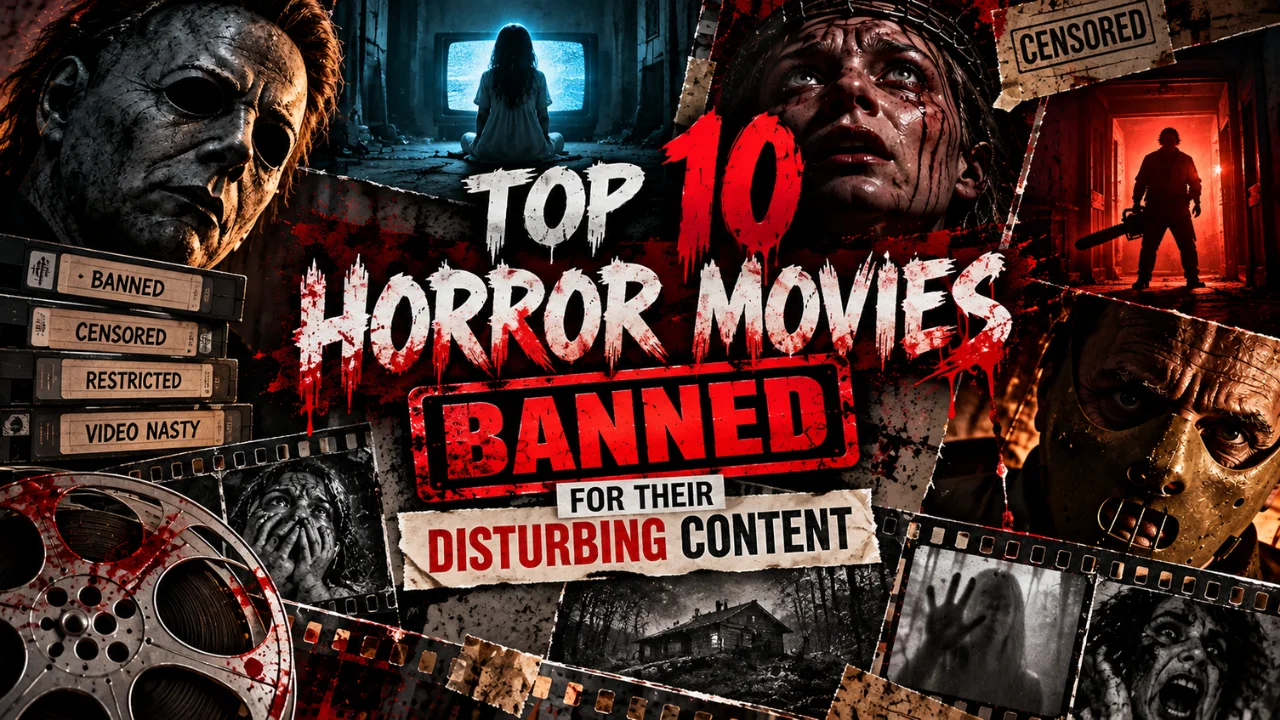
Some horror movies are made to scare you. Others go so far that countries refuse to show them. From shocking violence to deeply disturbing stories, these films pushed the limits of what audiences were allowed to watch.
The movies on this list became famous not just for their horror, but also for the controversy surrounding them. Some were banned, some had scenes removed, and others were refused permission for public release.
We ranked these ten films based on their censorship history, the seriousness of their disturbing content, and their impact on horror cinema. The ranking is editorial, not an official measure of how frightening each film is.
Content Warning: These movies contain extreme violence, sexual assault, abuse, and other upsetting material. They are intended for mature audiences, and several are difficult to watch even for experienced horror fans.
Content Advisory & Editorial Disclaimer
This article is written for educational, informational, and film-history purposes. It explores horror movies that faced bans, censorship, or release restrictions because of their disturbing content.
We do not support or encourage violence, sexual abuse, animal cruelty, or any harmful behavior shown in these films. Our goal is to explain their stories, censorship history, and impact on horror cinema.
Some movies discussed here contain extremely disturbing material and are intended for mature audiences. Reader discretion is advised.
The term “banned” refers to documented restrictions in specific countries or regions. Some films were later approved for release, while others were distributed in edited versions.
Here are the top 10 Infamous Banned Horror Movies historically banned for their disturbing content, along with the reasons they were censored:
10. The Human Centipede 2: Full Sequence (2011)
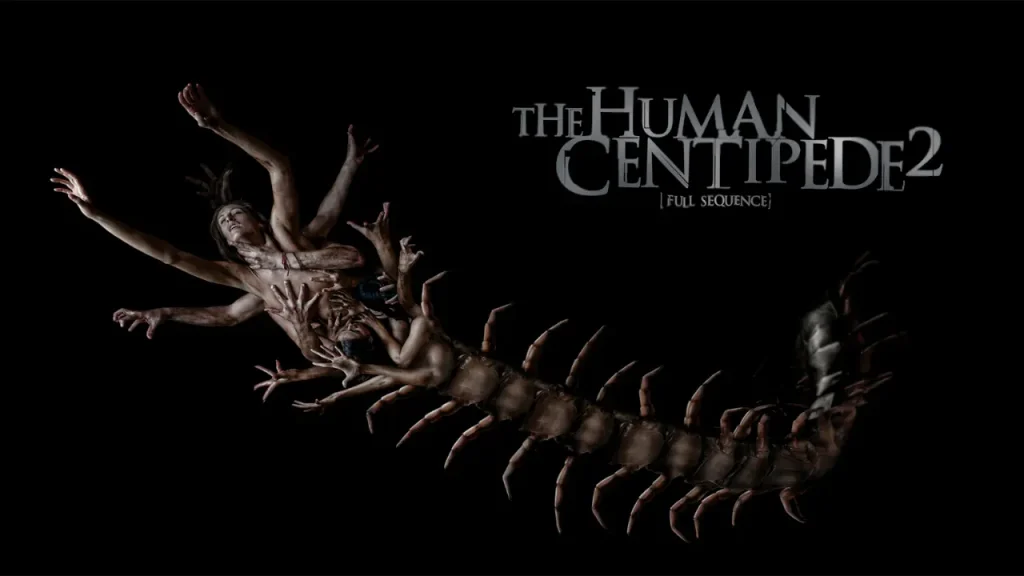
Martin is a lonely parking garage worker who lives a sad and troubled life. He spends most of his time watching a horror movie called The Human Centipede. Instead of being frightened by it, Martin becomes obsessed with the terrible things shown in the film.
Soon, he decides to create his own version of the horrifying experiment. He begins kidnapping people and keeping them inside an empty warehouse. His plan is even more disturbing than the events of the first movie.
Unlike the original film, this sequel is filmed mostly in black and white. The dark setting, Martin’s strange behavior, and the suffering of his victims create an uncomfortable feeling from beginning to end.
What makes the movie frightening is that Martin is not a skilled doctor or scientist. He is an ordinary man who becomes dangerously obsessed with something he sees on screen.
| Movie Details | Information |
|---|---|
| Directed By | Tom Six |
| Written By | Tom Six |
| Starring | Laurence R. Harvey, Ashlynn Yennie, Maddi Black |
| Genre | Body Horror, Psychological Horror |
| Released | 2011, Netherlands |
| Runtime | 1h 31m (original version) |
| Language | English |
| IMDb Rating | 3.8/10 |
| Where to Watch | Shudder, AMC+, Philo, Tubi (US availability; version may vary) |
Should I See It? Only if you already enjoy extremely disturbing horror movies. The film includes graphic violence, sexual violence, and cruel treatment of victims. It is not recommended for casual horror fans.
Why Was This Movie Banned? In June 2011, the British Board of Film Classification (BBFC) refused to give the movie a classification because of its extreme violence and sexual content. Without an approved classification, it could not receive a normal UK video release.
Later, the distributors made 32 individual cuts, and the edited version received an 18 classification in October 2011. The film was therefore initially refused release in its original form, rather than remaining permanently banned in the UK.
9. Nekromantik (1987)
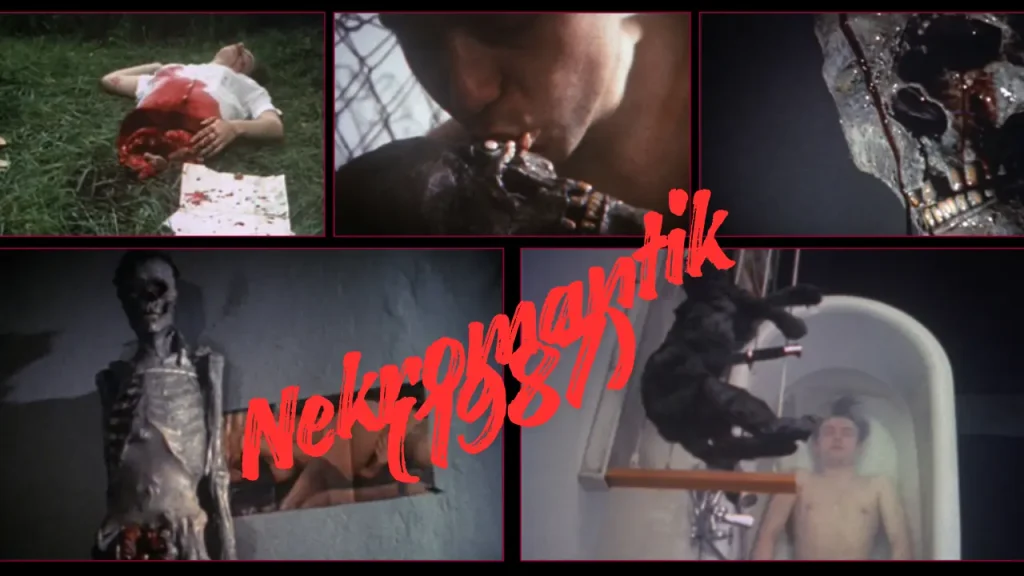
Rob works for a company that cleans up places where terrible accidents have happened. His job brings him close to death almost every day. Instead of feeling afraid or upset, Rob has developed a disturbing interest in dead bodies.
He lives with his girlfriend Betty, who shares his strange interests. Their relationship becomes even more troubling when Rob brings a dead body into their home. What follows is a dark story about obsession, loneliness, and a relationship that begins to fall apart.
The movie does not follow a normal horror story with ghosts, monsters, or killers chasing innocent people. Instead, it focuses on behavior that most viewers would find deeply upsetting.
What makes Nekromantik different is how calmly it presents its shocking subject. Its quiet moments can feel almost as uncomfortable as its violent scenes.
| Movie Details | Information |
|---|---|
| Directed By | Jörg Buttgereit |
| Written By | Jörg Buttgereit, Franz Rodenkirchen |
| Starring | Bernd Daktari Lorenz, Beatrice Manowski, Harald Lundt |
| Genre | Body Horror, Experimental Horror |
| Released | 1987, West Germany |
| Runtime | 1h 11m |
| Language | German |
| IMDb Rating | 4.8/10 |
| Where to Watch | Shudder, AMC+, Philo, Night Flight Plus (US) |
Should I See It? Only if you are interested in unusual underground horror films. It contains disturbing sexual material, dead bodies, and bloody violence. Most viewers who enjoy traditional horror movies may find it unpleasant rather than frightening.
Why Was This Movie Banned? Nekromantik became controversial because of its scenes involving dead bodies, sexual acts, and violence. Its subject matter made it difficult to distribute through normal movie channels.
However, claims that the film was completely banned in many countries need care. A reliable record of a worldwide or permanent nationwide ban has not been established here. The British Film Institute lists the film, and the BBFC has records of its disturbing content.
Its reputation comes largely from its shocking subject, underground release history, and censorship controversy rather than one clearly documented international ban.
8. Faces of Death (1978)

Faces of Death is different from most horror movies because it does not tell one fictional story. Instead, it presents a collection of frightening scenes involving accidents, deaths, medical procedures, and other disturbing events.
The movie is guided by a narrator who introduces himself as Dr. Francis B. Gröss. He takes viewers through different scenes while discussing the many ways people and animals can die.
One of the most unsettling things about the movie is that it was presented in the style of a documentary. Some scenes are real, while others were created using actors and special effects. This makes it difficult for viewers to know what they are actually watching.
When the film became popular on videotape, its shocking reputation spread quickly. People shared stories about the scenes, and many believed everything shown in the movie had really happened.
| Movie Details | Information |
|---|---|
| Directed By | John Alan Schwartz |
| Written By | John Alan Schwartz |
| Starring | Michael Carr, Samuel Berkowitz, Mary Ellen Brighton |
| Genre | Documentary Horror, Shock Cinema |
| Released | 1978, United States |
| Runtime | 1h 45m |
| Language | English |
| IMDb Rating | 4.3/10 |
| Where to Watch | Shudder, AMC+ and digital rental services in the US; check availability |
Should I See It? Only if you are comfortable watching extremely disturbing images. Unlike ordinary horror movies, some of the footage shows real events. Anyone sensitive to death, accidents, or animal suffering should avoid it.
Why Was This Movie Banned? Faces of Death became famous for claims that it had been banned in dozens of countries. However, the exact number of countries is difficult to prove, and its reputation often goes beyond the confirmed censorship records.
In the UK, the BBFC required cuts to scenes of animal cruelty before approving a home-video version in August 2003. The combination of real footage, staged deaths, and animal suffering played a major part in its censorship history.
7. The Last House on the Left (1972)
Mari Collingwood and her friend Phyllis are two young girls who decide to travel into the city to attend a concert. What begins as an exciting trip soon turns into a nightmare when they meet a group of dangerous criminals.
The criminals kidnap the girls and take them to a quiet place far from help. The two friends try to escape, but their attackers show very little mercy. Their journey becomes a frightening fight for survival.
Meanwhile, Mari’s parents are waiting for their daughter to come home. They have no idea what has happened or how close the criminals may be to their own house.
The movie becomes even darker when the story turns toward revenge. Instead of relying on supernatural horror, it shows how cruel ordinary people can become when fear, anger, and violence take control.
| Movie Details | Information |
|---|---|
| Directed By | Wes Craven |
| Written By | Wes Craven; story influenced by The Virgin Spring |
| Starring | Sandra Peabody, Lucy Grantham, David Hess, Fred J. Lincoln |
| Genre | Exploitation Horror, Revenge Thriller |
| Released | 1972, United States |
| Runtime | 1h 24m |
| Language | English |
| IMDb Rating | 5.8/10 |
| Where to Watch | MGM+, Philo, Tubi; Apple TV and Amazon Video rentals (US) |
Should I See It? Yes, if you want to explore the history of controversial horror movies. However, the film contains serious sexual violence and cruelty. Its frightening scenes can feel more upsetting than entertaining.
Why Was This Movie Banned? The film faced serious censorship problems because of its sexual violence and harsh treatment of its victims. It became one of the controversial movies associated with the British video-nasty era.
Its history includes edited versions, release restrictions, and later approved releases. It is important not to confuse these restrictions with a permanent worldwide ban.
The movie also became an important early work by Wes Craven, who later directed A Nightmare on Elm Street and Scream.
6. Grotesque (2009)
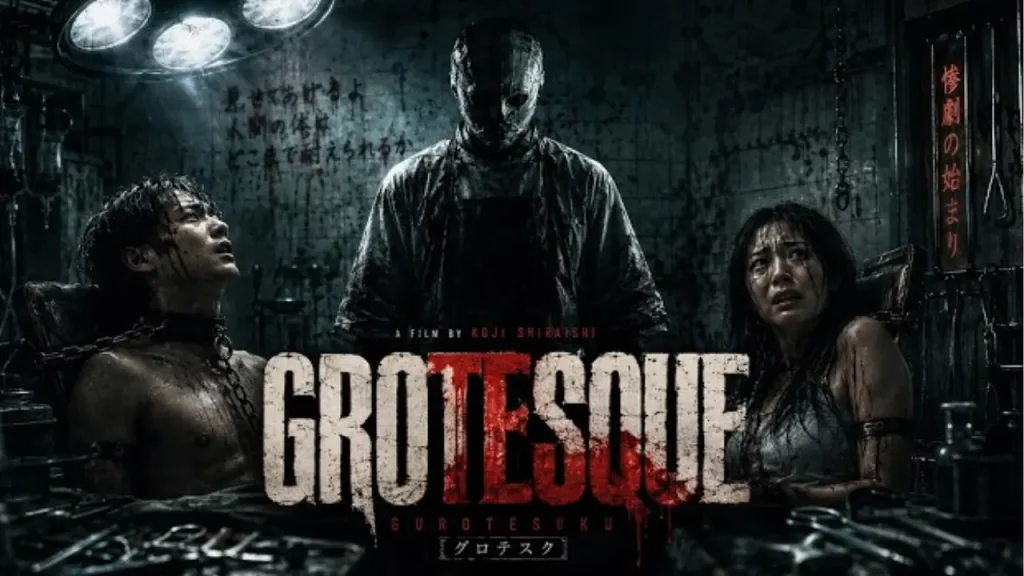
Aki and Kazuo are a young couple enjoying time together when their lives suddenly change. A mysterious man attacks them and takes them to an unknown location. When they wake up, they discover that they have been trapped by a dangerous stranger.
Their captor is a doctor who has no interest in helping them. Instead, he forces the couple through a series of frightening tests. His actions become increasingly cruel, and the two victims struggle to understand why they have been chosen.
Most of the movie takes place inside a closed room, creating a trapped feeling. There are very few places to hide, and the couple has almost no control over what happens to them.
Unlike horror movies that develop a mystery or a complicated story, Grotesque focuses heavily on the suffering of its characters. The violence continues for much of the film, leaving very little time for viewers to feel comfortable.
| Movie Details | Information |
|---|---|
| Directed By | Kōji Shiraishi |
| Written By | Kōji Shiraishi |
| Starring | Hiroaki Kawatsure, Tsugumi Nagasawa, Shigeo Ôsako |
| Genre | Torture Horror, Body Horror, Thriller |
| Released | 2009, Japan |
| Runtime | 1h 13m |
| Language | Japanese |
| IMDb Rating | 4.8/10 |
| Where to Watch | Limited US streaming and digital rental options; availability varies |
Should I See It? Only if you can handle extremely graphic horror. The film contains torture, sexual violence, and severe injuries. It is not recommended for viewers looking for a meaningful mystery or a traditional scary story.
Why Was This Movie Banned? In August 2009, the BBFC refused to classify Grotesque for UK home release.
The board said the film placed too much attention on sexual violence, humiliation, and torture, with very little story or character development.
The BBFC also decided that removing a few scenes would not solve the problem because disturbing material appeared throughout the film. As a result, the movie could not receive a normal classified UK video release.
5. I Spit on Your Grave (1978)
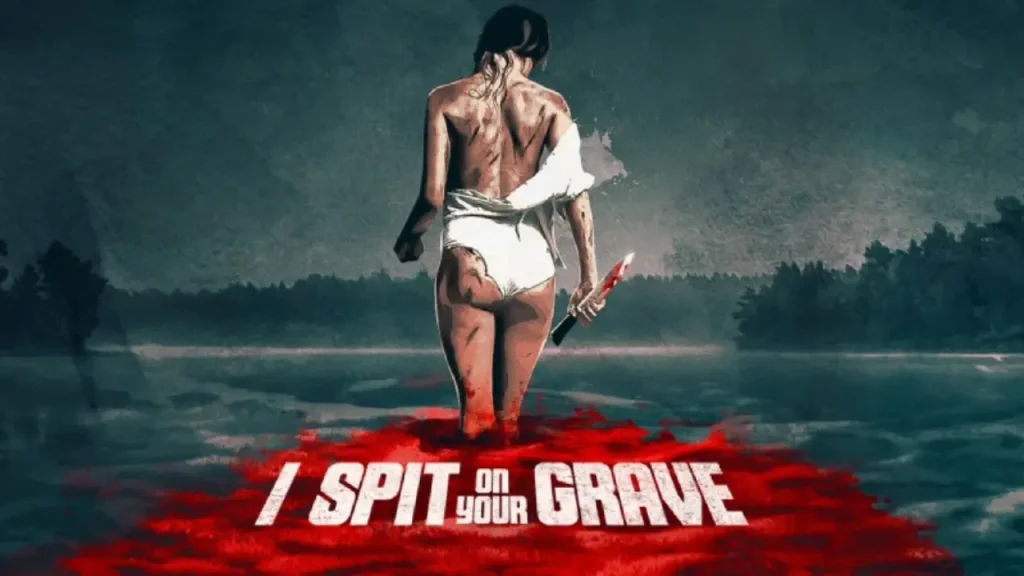
Jennifer Hills is a young writer who leaves New York City to spend some peaceful time in the countryside. She rents a quiet cabin where she hopes to relax and work on her new book. At first, everything seems perfect for a peaceful vacation.
However, Jennifer soon attracts the attention of a group of local men. Their behavior becomes increasingly frightening, and what begins as unwanted attention turns into a terrible attack.
After surviving the assault, Jennifer is left alone to deal with what happened to her. Instead of returning to her old life, she decides to take revenge on the men who hurt her.
The film follows her painful journey from being a helpless victim to someone determined to fight back. It is a dark and uncomfortable story that raises difficult questions about violence, revenge, and justice.
| Movie Details | Information |
|---|---|
| Directed By | Meir Zarchi |
| Written By | Meir Zarchi |
| Starring | Camille Keaton, Eron Tabor, Richard Pace, Anthony Nichols |
| Genre | Revenge Horror, Exploitation Thriller |
| Released | 1978, United States |
| Runtime | 1h 41m |
| Language | English |
| IMDb Rating | 5.7/10 |
| Where to Watch | Shudder, AMC+, Philo, Midnight Pulp, Tubi (US) |
Should I See It? Only if you are comfortable with serious and disturbing themes. The movie contains long scenes of sexual violence and brutal revenge. Although it is an important part of horror history, many viewers may find its content too upsetting.
Why Was This Movie Banned? I Spit on Your Grave became one of the most controversial films of the British video-nasty era during the 1980s.
When the movie was submitted for UK video classification in 2001, the BBFC required more than seven minutes of cuts because of its scenes of sexual violence. Later reviews reduced the amount that had to be removed, but the uncut version continued to face objections.
The film eventually received an approved UK release in an edited form. Its censorship history shows why it remained controversial long after its original release.
4. The Texas Chain Saw Massacre (1974)

Five young friends are traveling through the countryside of Texas when they decide to visit an old family home. The trip seems harmless at first, but strange things begin happening after they stop near an isolated property.
The group soon discovers that someone dangerous is living nearby. Their situation becomes terrifying when they encounter Leatherface, a masked killer who carries a chainsaw and lives with a deeply disturbing family.
As the friends try to escape, they find themselves trapped in a place where nobody seems able to help them. The empty roads, strange houses, and frightening sounds make everything feel hopeless.
What makes The Texas Chain Saw Massacre so scary is its rough and realistic appearance. The movie feels dirty, hot, and uncomfortable, almost as though the terrible events could be happening somewhere in real life.
| Movie Details | Information |
|---|---|
| Directed By | Tobe Hooper |
| Written By | Kim Henkel, Tobe Hooper |
| Starring | Marilyn Burns, Gunnar Hansen, Edwin Neal, Paul A. Partain |
| Genre | Slasher Horror, Survival Horror |
| Released | 1974, United States |
| Runtime | 1h 23m |
| Language | English |
| IMDb Rating | 7.4/10 |
| Where to Watch | Netflix, Prime Video, Shudder, Peacock, Tubi (US) |
Should I See It? Yes, if you enjoy classic horror movies filled with fear, suspense, and frightening characters. Although it is intense, much of its horror comes from sounds, atmosphere, and the feeling of danger rather than constant graphic violence.
Why Was This Movie Banned? The movie faced strong censorship problems in the United Kingdom because of its frightening atmosphere and disturbing violence.
British film censors were concerned that its overall effect was too intense for audiences, even though the movie showed less graphic violence than many later horror films.
After years of restrictions, the BBFC finally approved the film for UK cinema release in March 1999 with an 18 certificate and no cuts. This was an important change in the movie’s long censorship history.
3. Salò, or the 120 Days of Sodom (1975)
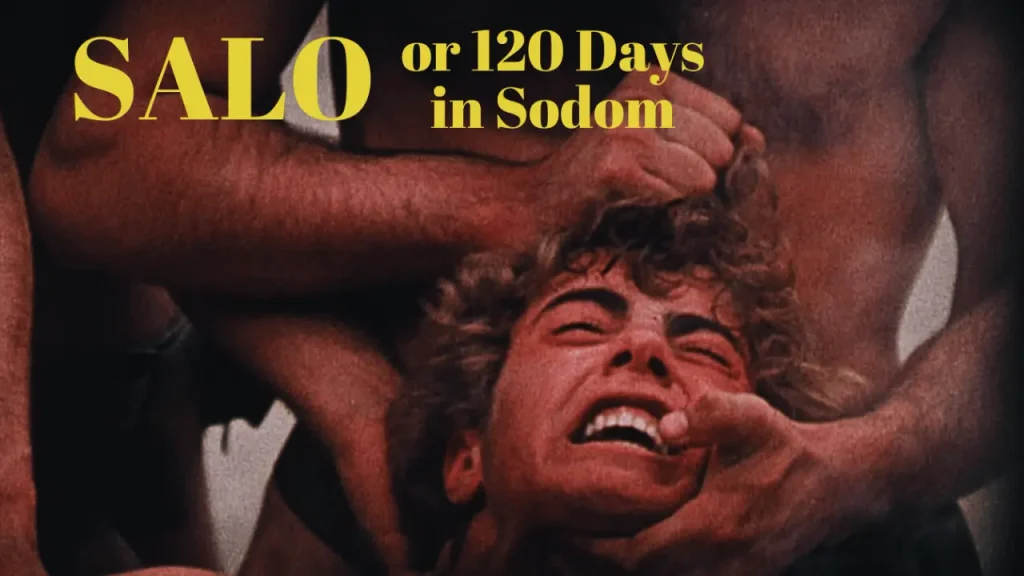
During the final years of World War II, four powerful men take control of a group of young people in Italy. They bring their victims to an isolated mansion where nobody can escape or ask for help.
Inside the mansion, the men create cruel rules that everyone must follow. The young prisoners are treated as objects rather than human beings, and their captors use fear and violence to control them.
As the days pass, the situation becomes increasingly disturbing. The film shows how people with complete power can hurt others when nobody is there to stop them.
Unlike most horror movies, Salò does not rely on monsters or sudden scares. Its horror comes from cruelty, abuse of power, and the suffering of people who have no freedom.
| Movie Details | Information |
|---|---|
| Directed By | Pier Paolo Pasolini |
| Written By | Pier Paolo Pasolini, Sergio Citti, with other screenplay collaborators |
| Starring | Paolo Bonacelli, Giorgio Cataldi, Uberto Paolo Quintavalle, Aldo Valletti |
| Genre | Psychological Drama, Extreme Horror, Political Drama |
| Released | 1975, Italy and France |
| Runtime | 1h 57m |
| Language | Italian |
| IMDb Rating | 5.8/10 |
| Where to Watch | No US streaming service confirmed; Criterion Collection DVD and Blu-ray editions |
Should I See It? Only if you are interested in serious and extremely disturbing cinema. The film includes sexual violence, humiliation, and cruel treatment of young people. It is not a good choice for someone looking for ordinary horror entertainment.
Why Was This Movie Banned? Salò became controversial because of its graphic sexual abuse, torture, and disturbing treatment of young prisoners.
The BBFC refused to classify the film when it was submitted in the UK in January 1976. Its content was considered too extreme for a normal release at that time.
However, the movie was later approved for UK cinema release in November 2000 and received subsequent home-video classifications. It remains one of the most discussed examples of censorship in European cinema.
2. A Serbian Film (2010)
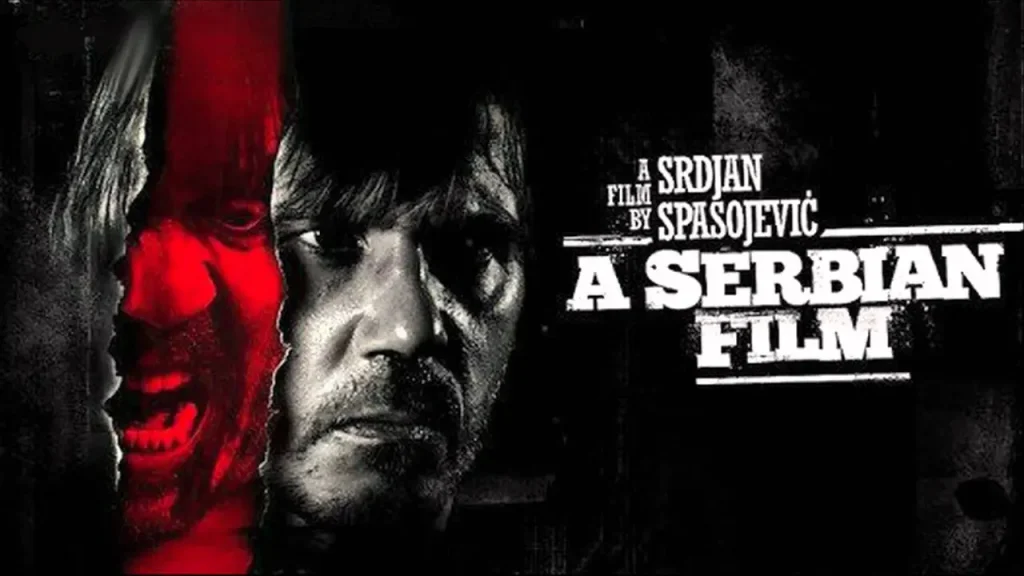
Miloš is a retired adult-film actor who now lives a quiet life with his wife and young son. He wants to leave his past behind and provide a better future for his family, but money problems make his life difficult.
One day, he receives an offer to take part in a mysterious new film. The payment is extremely high, and the people behind the project promise that it will be something special.
At first, Miloš believes the job could solve his financial problems. However, he soon discovers that the director is hiding terrible plans. The situation becomes more dangerous as Miloš loses control over what is happening around him.
The story grows darker as he tries to understand the truth and protect his family. Instead of traditional horror, the movie uses deeply disturbing situations to create fear and shock.
| Movie Details | Information |
|---|---|
| Directed By | Srđan Spasojević |
| Written By | Aleksandar Radivojević, Srđan Spasojević |
| Starring | Srđan Todorović, Sergej Trifunović, Jelena Gavrilović |
| Genre | Extreme Horror, Psychological Thriller |
| Released | 2010, Serbia |
| Runtime | 1h 44m (original version) |
| Language | Serbian |
| IMDb Rating | 4.9/10 |
| Where to Watch | Fandango at Home Free, Filmzie, digital rentals (US; check version) |
Should I See It? Not for most viewers. The film contains extreme sexual violence, child abuse themes, and very disturbing scenes. Even people who regularly watch violent horror movies may find its content difficult to handle.
Why Was This Movie Banned? A Serbian Film faced serious censorship problems because of its scenes involving sexual violence and the abuse of children.
In the UK, the BBFC required 49 individual cuts across 11 scenes. The distributor removed more than four minutes of material before the edited film received an 18 certificate in October 2010.
A planned screening at the FrightFest horror festival was also cancelled when the organizers chose not to show an edited version.
Its release history shows how strongly film censors objected to parts of the movie, even when it was presented as a political work.
1. Cannibal Holocaust (1980)
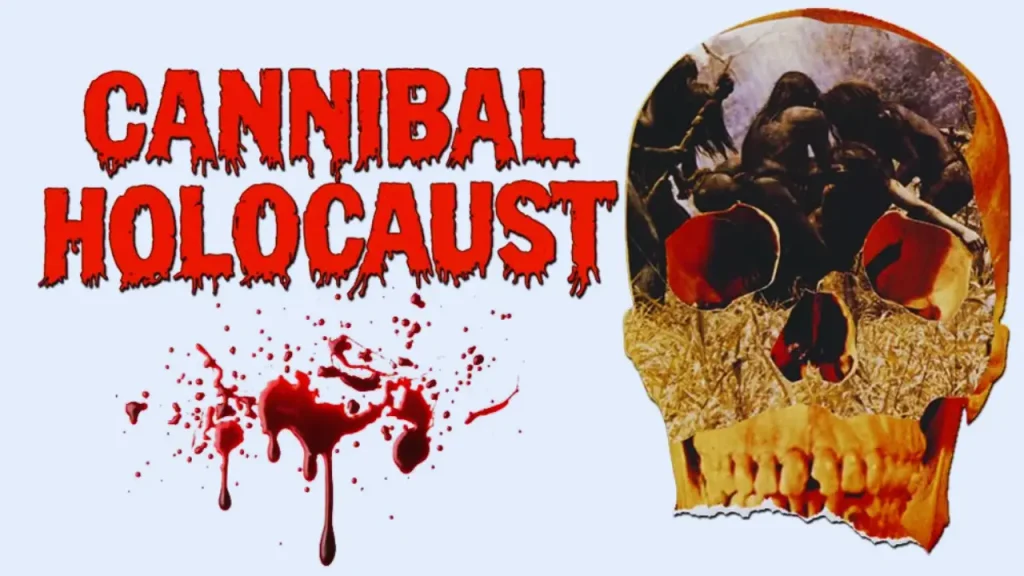
A group of young documentary filmmakers travels deep into the Amazon rainforest to make a movie about isolated communities. They hope to capture something shocking that will attract attention back home.
However, the filmmakers disappear during their journey. A professor named Harold Monroe is sent into the jungle to discover what happened to them. His search leads him to a remote area where he begins finding clues about the missing group.
Eventually, Monroe discovers recordings left behind by the filmmakers. When he watches the footage, he learns that their journey was far more disturbing than anyone had imagined.
What makes Cannibal Holocaust especially frightening is the way it uses handheld cameras and realistic footage. The movie looks like a documentary rather than a normal horror film, making some scenes feel shockingly real.
| Movie Details | Information |
|---|---|
| Directed By | Ruggero Deodato |
| Written By | Gianfranco Clerici |
| Starring | Robert Kerman, Francesca Ciardi, Perry Pirkanen, Luca Barbareschi |
| Genre | Found-Footage Horror, Cannibal Horror |
| Released | 1980, Italy |
| Runtime | 1h 35m to 1h 36m, depending on version |
| Language | English, Spanish and other dialogue depending on release |
| IMDb Rating | 5.7/10 |
| Where to Watch | Shudder, AMC+, Fandor, Cultpix, Midnight Pulp (US) |
Should I See It? Only if you are studying the history of extreme horror cinema and understand what the movie contains. It includes graphic violence, sexual assault, and real animal killings. The animal cruelty scenes are especially upsetting and cannot be treated as ordinary movie effects.
Why Was This Movie Banned? Cannibal Holocaust faced serious legal and censorship problems because of its graphic violence, sexual assault, and the killing of real animals during production.
The film’s realistic appearance also led to questions about whether its actors had actually been harmed. Director Ruggero Deodato faced legal scrutiny and had to establish that the human deaths shown on screen were staged.
In the UK, the movie became one of the most notorious titles associated with the video-nasty controversy. When it was submitted for official video classification in 2001, the BBFC required five minutes and 44 seconds of cuts.
Later versions received fewer cuts. In 2011, the BBFC required only 15 seconds to be removed, involving one scene of animal cruelty. That requirement remained in place for the film’s 2022 submission.
The combination of realistic violence, real animal suffering, and a long censorship history makes Cannibal Holocaust our number-one entry.
10 More Horror Movies That Faced Bans or Censorship
Beyond our top 10, these horror movies also became famous for their disturbing scenes, controversial stories, and problems with film censors around the world.
The Evil Dead (1981) – Five friends accidentally release evil spirits in a lonely cabin. Its bloody violence led to cuts and years of UK video restrictions. BFI Southbank
The Exorcist (1973) – A young girl becomes possessed by a terrifying spirit. The movie’s UK home-video release was restricted for 11 years before approval in 1999. BBFC
Possession (1981) – A broken marriage turns into a frightening nightmare filled with strange behavior and supernatural horror. The film appeared on Britain’s controversial video-nasty list. BFI
The Beyond (1981) – A woman inherits a hotel hiding a doorway to hell. Its bloody scenes resulted in censorship cuts and video-nasty controversy. IMDb
Antichrist (2009) – A grieving couple travels to a remote cabin, where their relationship takes a horrifying turn. Its graphic content sparked calls for a ban, although the UK approved it uncut. BBFC
Zombie (1979) – A mysterious boat leads investigators to an island filled with flesh-eating zombies. Its graphic attacks caused controversy and censorship.
The House by the Cemetery (1981) – A family moves into an old house where a terrifying secret waits underground. Its bloody violence brought censorship problems.
The Driller Killer (1979) – A struggling artist slowly loses his mind and begins attacking people with a power drill. Its violent imagery made it notorious during Britain’s video-nasty controversy.
Maniac (1980) – A disturbed killer stalks women across New York City. Its graphic murders and disturbing story attracted strong criticism and release restrictions.
Island of Death (1976) – A couple visits a peaceful Greek island but begins committing terrible crimes against its residents. Its sexual violence and cruelty made it one of the controversial video-nasty titles.
These films show that horror censorship has taken many forms. Some movies were temporarily banned, others were released with cuts, and a few became famous simply because authorities considered their content too disturbing for viewers.
Final Thoughts: Some Horror Movies Are Too Disturbing to Forget
Some horror movies make you scream, some give you nightmares, and others leave you wondering how they were ever made in the first place. The films on this list belong to that last group.
From the terrifying realism of Cannibal Holocaust to the shocking story of A Serbian Film, these movies pushed the limits of horror and sparked debates that continue today. Some faced bans, while others were heavily censored before audiences could watch them.
But here’s the interesting part: being banned doesn’t always mean a movie is good, and being disturbing doesn’t always make it scary. Sometimes, the most frightening thing about a film isn’t what happens on screen, but the questions it leaves in your mind afterward.
Decades later, these controversial horror movies still attract attention because of their strange stories, shocking reputations, and unusual place in cinema history.
So, here’s one final question: Would you dare to watch a horror movie that was once considered too disturbing for the public?
Frequently Asked Questions
Horror movies may be banned or restricted because they contain extreme violence, sexual abuse, animal cruelty, or other disturbing material. Film classification authorities review movies based on their country’s laws and guidelines. Some films are completely refused classification, while others are approved after certain scenes are removed.
A banned horror movie is one that authorities have prohibited from being shown or distributed in a particular place. A censored movie may still be released, but certain scenes are removed or changed. A movie can also be restricted to adults without being banned. These rules vary between countries.
Not always. A horror movie banned in one country may be legally available in another. Some films also become available after restrictions are lifted or edited versions are approved. Whether watching or distributing a particular movie is legal depends on local laws and the type of restriction involved.
Not necessarily. Banned horror movies often focus on shocking violence and disturbing subjects, while traditional horror movies may create fear through suspense, mystery, and supernatural events. A movie can be extremely disturbing without being particularly scary. What frightens people depends on their personal experiences and preferences.
Some previously banned horror movies are available through legal streaming services, digital rentals, and physical releases such as DVD or Blu-ray. Platforms including Shudder, AMC+, and other movie services may carry certain titles. Availability depends on your country, and some services offer edited versions rather than the original films.
Yes, horror movies can still face censorship, classification refusals, and distribution restrictions. However, modern classification systems often allow disturbing films to receive adult-only ratings or edited releases instead of complete bans. Decisions depend on local laws, the content of the movie, and the standards used by film authorities.